SSO Agency · October 23, 2026
When Custom Software Is the Right Growth Decision
A spreadsheet that requires three people to update, a sales team copying data between systems, and a product team waiting on workarounds are not isolated inconveniences. They are operating signals. Custom software becomes relevant when those signals begin to constrain revenue, customer experience, delivery speed, or the team's ability to make confident decisions.
The right question is not whether a company can build something custom. Nearly any company can. The question is whether a tailored application, integration, or internal platform will solve a meaningful business constraint better than configuring an existing tool, changing a process, or retiring work that no longer matters.
For growth-stage companies, getting that decision right protects capital and momentum. Getting it wrong can create a costly system that duplicates off-the-shelf functionality, accumulates maintenance obligations, and distracts the organization from its actual priorities.
What custom software should accomplish
Custom software is not defined by a particular programming language or a polished user interface. It is software designed around a company's specific workflow, data model, operating constraints, or customer experience. It can be a customer portal, a workflow engine, a backend service, a reporting layer, an integration between critical systems, or a new product capability.
Its value comes from fit. A well-designed system removes the friction that generic platforms cannot reasonably address. It gives teams one reliable process instead of a collection of manual exceptions. It can also create a differentiated customer experience when the way a company delivers value is part of its competitive position.
That does not mean every internal frustration deserves an application. A manual process can be acceptable when it is temporary, low-volume, or still changing quickly. Building too early often hardens assumptions that have not been tested. The aim is to build the smallest durable solution that addresses a clear constraint while leaving room for the business to evolve.
The signs a tailored solution is justified
The strongest case for custom development usually appears where a business process is both important and difficult to manage with existing tools. It may involve sensitive data, several disconnected systems, complex approval rules, or a workflow that directly affects customers.
Consider a service business that depends on data from its CRM, project management platform, billing system, and client communications. If employees spend hours reconciling records, the issue is not simply administrative effort. It is delayed decisions, inconsistent reporting, and a higher chance that customers receive incomplete information. A custom integration or operations platform may be more valuable than adding another subscription tool.
A product company faces a different version of the same problem. An MVP may have proven demand, but its original architecture may not support more users, enterprise requirements, new product lines, or the pace of feature delivery. In that situation, the work is not a cosmetic rebuild. It is an opportunity to strengthen the technology foundation before technical debt becomes an operational constraint.
Custom work is also appropriate when a company needs to preserve control over a core capability. Generic tools are useful for standardized needs such as basic accounting or routine communications. But when the workflow represents proprietary operations, complex business rules, or a central customer promise, dependence on a tool's limitations and roadmap can become a strategic risk.
When buying or configuring software is the better answer
A disciplined technology partner should be willing to recommend against building. Off-the-shelf software is often the better option when the underlying need is common, the process does not differentiate the business, and configuration can support the required workflow without brittle workarounds.
The cost comparison should include more than initial development. A custom system requires product decisions, ongoing maintenance, security updates, monitoring, documentation, and people who understand how it works. Those are reasonable commitments for a core capability. They are unnecessary overhead for a commodity function.
The practical middle ground is frequently integration and selective extension. A company might keep its CRM, billing platform, and support system while building a lightweight layer that connects data, applies its own business rules, and gives users a clearer operational view. This approach can remove manual bottlenecks without recreating mature software that already does its job well.
Start with the business constraint, not the feature list
Feature lists tend to expand faster than clarity. Before defining screens, APIs, or technical architecture, leadership should identify the constraint the work needs to remove. Is the goal to shorten onboarding? Reduce fulfillment errors? Support a new revenue model? Give clients access to real-time information? Prepare a platform for enterprise sales or fundraising scrutiny?
A useful early assessment examines four areas:
- Business value: What outcome changes if this process becomes faster, more accurate, or easier to scale?
- Process maturity: Is the workflow stable enough to encode in software, or is the team still discovering how it should work?
- Technical feasibility: What systems, data sources, security requirements, and integration limits shape the solution?
- Ownership: Who will make product decisions, validate assumptions, and support the system after launch?
These questions bring assumptions into the open. They also make scope decisions more defensible. If a feature does not contribute to the primary business outcome, it can wait. That is not compromise for its own sake. It is how teams ship useful work before the market or internal requirements move again.
Build for change without building for every possibility
Scalability is often misunderstood as preparing for a hypothetical massive user base. In practice, scalable software is software that can accommodate the changes a business is likely to face: more transactions, more users, additional integrations, new permissions, stricter security expectations, or a wider product offering.
That requires sound architectural choices, but it also requires restraint. Over-engineering a first release creates cost and delay. Under-engineering creates fragile systems that are expensive to change. The appropriate design depends on the product's risk profile, expected growth, compliance needs, and the cost of failure.
A strong delivery plan separates what must be right from what can improve over time. Identity and access controls, data integrity, core business logic, observability, and recovery procedures deserve early attention when they are relevant. Visual refinements, secondary workflows, and lower-value automation can usually follow after teams have evidence that the central path works.
AI belongs where it improves a defined workflow
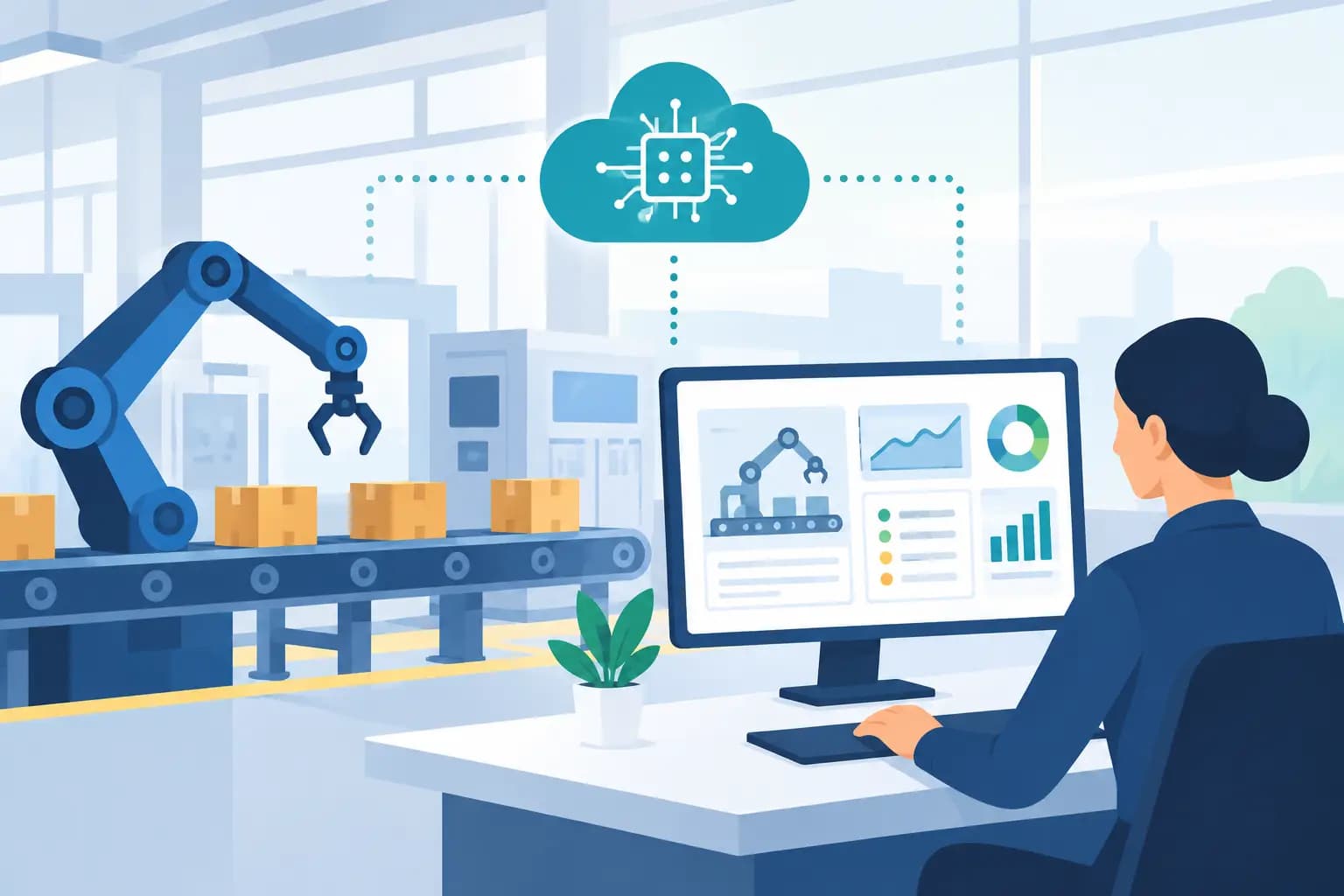
AI can increase the value of custom software, particularly in internal tools that handle repetitive analysis, document processing, knowledge retrieval, or customer communications. But it should not be added because it makes a roadmap sound more advanced.
The useful starting point is a specific workflow with measurable friction. For example, an operations team may need to classify inbound requests, assemble information from multiple systems, or draft responses for human review. An AI-enabled feature may help, provided the data boundaries, review requirements, failure modes, and ongoing costs are understood.
For higher-risk decisions, human approval and clear auditability remain essential. Production AI systems also need evaluation criteria, permission controls, monitoring, and a plan for model or vendor changes. The opportunity is practical: reduce repetitive work and give employees better context. The standard should be maintainability and business value, not novelty.
Delivery quality is a commercial issue
Custom development is often framed as an engineering project, but its quality affects commercial outcomes. Unclear requirements create missed expectations. Weak documentation makes future changes slow and costly. Poor security practices can complicate enterprise sales, diligence, and customer trust. A platform that only one developer understands becomes a business continuity risk.
This is why experienced senior involvement matters early. The team needs to challenge ambiguous requirements, identify dependencies, and explain tradeoffs in business terms before costly commitments are made. Nearshore delivery can add meaningful execution capacity, but proximity in time zone is only useful when communication is direct, decisions are visible, and accountability remains clear.
At SSO Agency, the goal is to move from assessment to implementation with a roadmap grounded in the actual operating problem. That may mean building a new application, modernizing a fragile component, connecting systems, or deciding that custom development is not the right investment yet.
The most valuable custom software does not announce itself as a technology initiative. It shows up as a faster operation, a more dependable product, clearer information, and a business that can take its next step without relying on another manual workaround.