SSO Agency · October 17, 2026
AI Consultancy Review: What Leaders Should Assess
A useful AI consultancy review is not a tour of impressive demos or a list of tools your team could try. It is a decision document: where AI can remove a real operational bottleneck, what must be true for it to work, and whether the business can support it after launch.
For founders, operators, and product leaders, the stakes are practical. An AI initiative can shorten response times, reduce repetitive work, improve internal access to information, or strengthen a product feature. It can also introduce unreliable outputs, data exposure, unsupported maintenance work, and a new layer of complexity around systems that already need attention.
The difference is rarely the model itself. It is the quality of the assessment, the integration design, and the discipline to prioritize work that has a credible path from experiment to daily use.
What an AI Consultancy Review Should Actually Deliver
A credible review starts with business objectives, not AI capabilities. If a company is losing time to manual document processing, fragmented customer data, slow proposal creation, or repetitive support triage, those are the problems to evaluate. “We need AI” is not a requirement. It is a hypothesis that needs to be tested against process realities, data quality, security needs, and expected operational value.
The output should give leadership a clear execution roadmap. That typically means identifying the highest-value use cases, separating feasible opportunities from attractive but premature ideas, and defining what implementation would require. The work should translate technical choices into decisions around cost, ownership, risk, timelines, and measurable operational outcomes.
A review that ends with broad recommendations such as “use an AI chatbot” or “automate your workflows” has not done enough. Leaders need to know which workflow, which users, which systems, what human oversight is required, and what happens when the model is uncertain or wrong.
Start With the Workflow, Not the Tool
The most practical AI opportunities usually sit inside a known process. A sales team may spend hours researching accounts and preparing first drafts. An operations team may re-key information across systems. A client services team may search across scattered documents to answer recurring questions. A product team may need a better way to classify incoming feedback or support requests.
Each situation calls for a different approach. A conversational interface may help employees find approved information, but only if the underlying knowledge is current and access-controlled. A document-processing workflow may reduce manual work, but only if exceptions are routed to people instead of silently passing bad data downstream. An AI feature inside a customer product needs much stronger attention to reliability, prompt design, observability, and user experience than an internal drafting assistant.
A strong assessment maps the workflow before proposing a solution. It asks where work begins, what information enters the process, where decisions happen, which systems are involved, and where errors create business consequences. This exposes whether AI is the right lever or whether a simpler integration, process change, or rules-based automation should come first.
That distinction matters. AI can handle ambiguity and unstructured information in ways conventional automation cannot. It should not be used to compensate for a broken approval process, missing source-of-truth system, or unclear ownership.
The Core Questions in an AI Consultancy Review
Is there enough value to justify implementation?
Not every repetitive task deserves an AI solution. Frequency, time burden, error cost, and strategic importance all matter. A workflow performed a few times each quarter may not warrant custom development. A high-volume process that affects customer response times, revenue operations, or delivery capacity may.
Value also depends on adoption. A tool that technically works but creates an extra step for busy employees will struggle. The review should identify who will use the system, what behavior must change, and whether the new workflow is clearly better than the current one.
Is the data usable and appropriately governed?
AI systems are only as dependable as the information and instructions surrounding them. The assessment should determine where data lives, whether it is accurate, who can access it, and how it moves between systems. It should also establish which information should never be passed to an external model or included in prompts.
This is particularly important for companies with customer records, proprietary product data, financial information, or sensitive internal documentation. Security is not a final-stage checklist. It shapes architecture from the beginning, including access controls, retention policies, vendor settings, auditability, and human review paths.
Can the solution be maintained after it ships?
A prototype may work with a carefully prepared prompt and a small sample of clean inputs. Production use is different. Real users introduce incomplete requests, unusual edge cases, changing terminology, and pressure to expand the system beyond its original scope.
A practical review defines ownership. It clarifies who will update source content, monitor quality, handle failures, approve changes, and support users. It also considers the surrounding software work: integrations, authentication, databases, logging, interfaces, and deployment. The model is only one component of a reliable system.
Where must people stay in the loop?
Human review is not a sign that an AI project has failed. In many workflows, it is the right design choice. AI can prepare a draft, extract relevant information, suggest a classification, or route a request. A person can make the final decision when accuracy, customer trust, policy, or commercial judgment is involved.
The right level of oversight depends on the consequence of an error. Internal copywriting may need light review. Customer-facing recommendations, workflow approvals, or actions that update core systems may need explicit confirmation and clear escalation paths.
Evaluate the Technical Foundation Before Expanding Scope
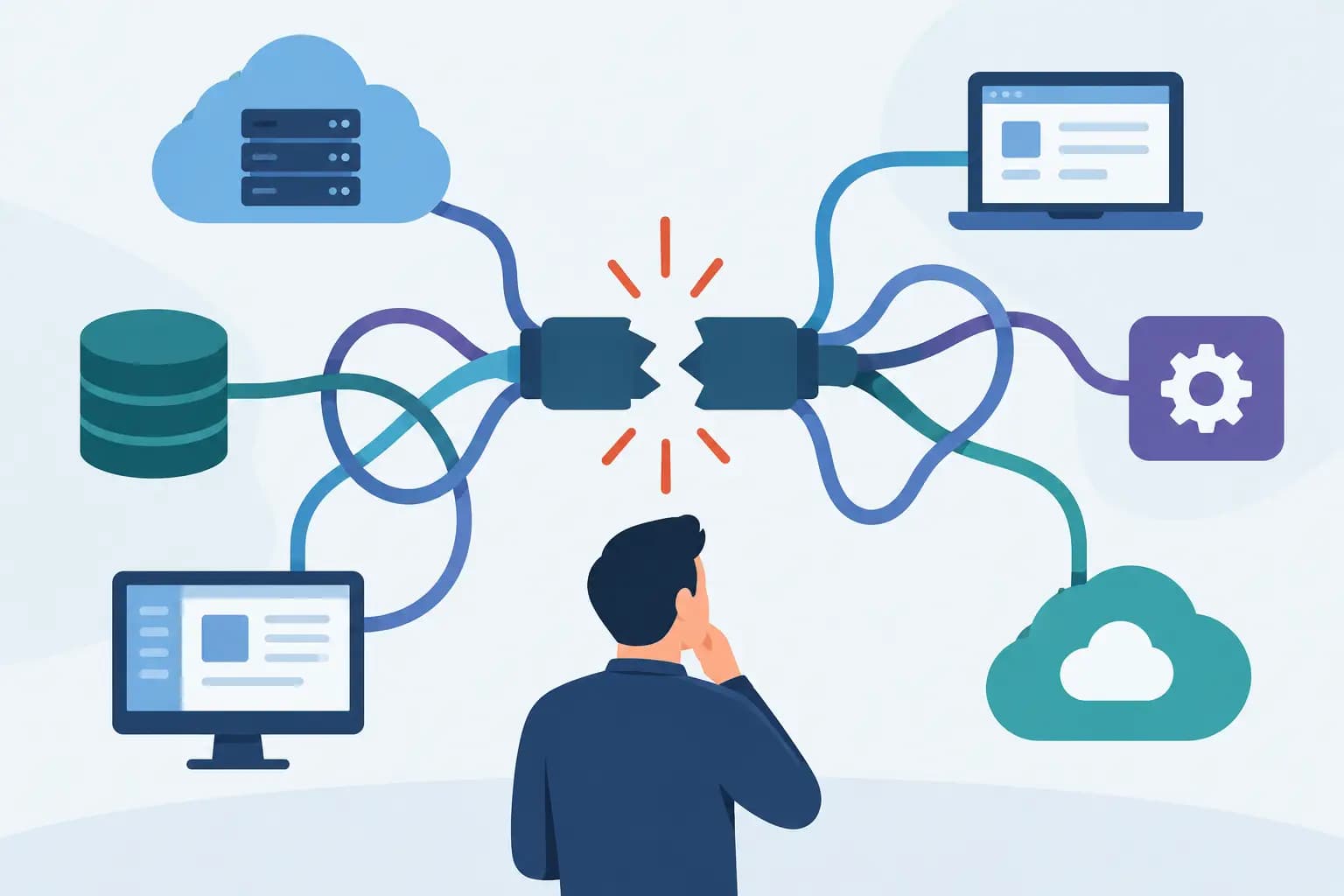
AI projects often reveal issues that existed long before AI entered the conversation: disconnected applications, undocumented integrations, inconsistent data definitions, fragile legacy services, and unclear permissions. These are not reasons to abandon the opportunity. They are reasons to sequence the work correctly.
Sometimes the best first step is a targeted integration or cleanup effort that creates a stable foundation for automation. Other times, a contained internal use case can move forward while broader data work continues. The answer depends on the business priority and the cost of waiting.
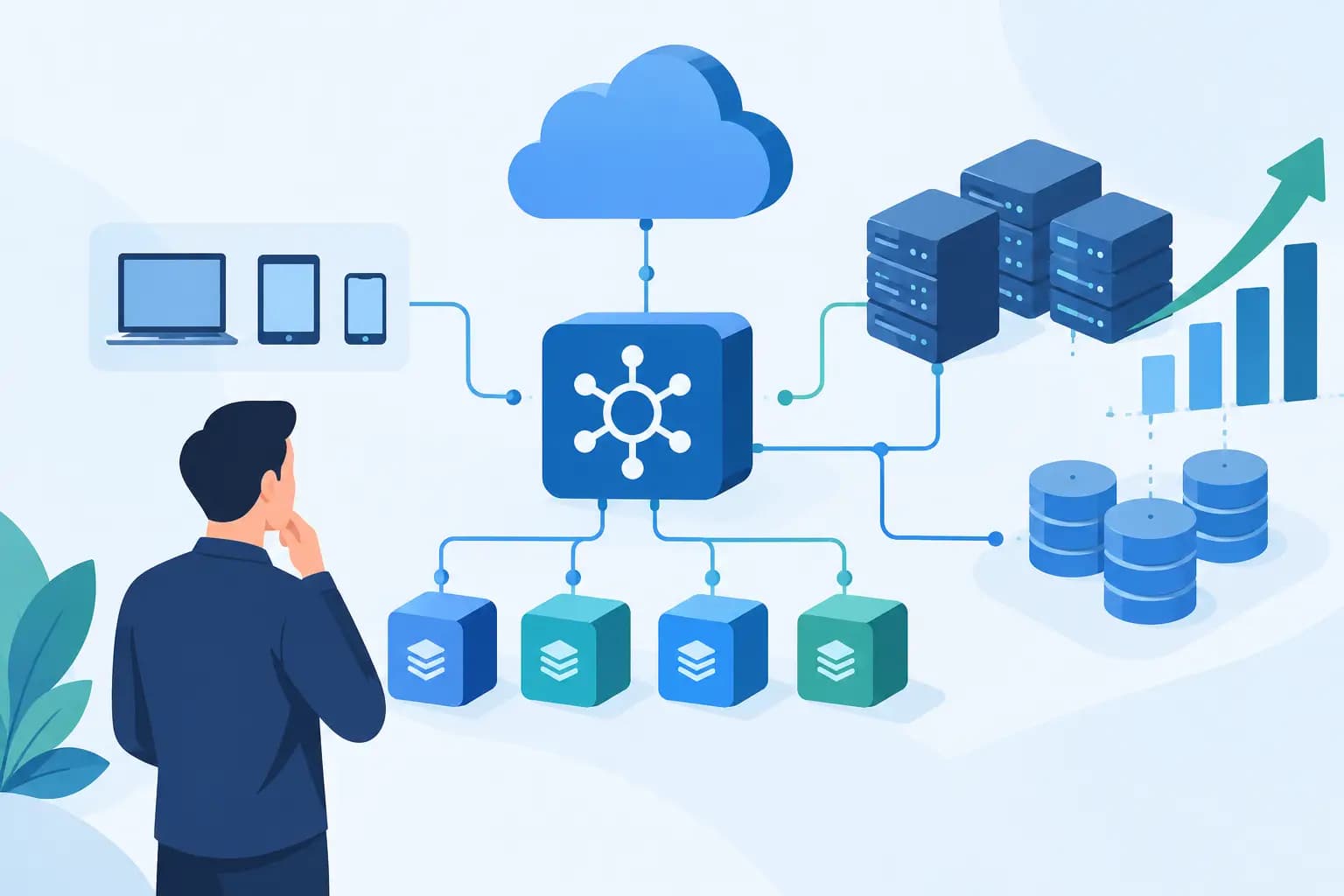
This is where senior technical judgment matters. A consultancy should be able to assess the architecture, not just configure a model. It should explain whether the project requires a lightweight workflow automation, a custom internal tool, a new backend service, or changes to the existing product. It should also be direct when a proposed use case carries more maintenance burden than business value.
At SSO Agency, that work combines AI and automation assessment with the custom software and technical diligence capability required to act on the findings. The aim is not to add AI everywhere. It is to build and ship the systems that remove manual bottlenecks without creating unnecessary technical or operational risk.
How to Judge the Quality of the Recommendation
The clearest sign of a useful recommendation is specificity. You should be able to see the workflow, the users, the systems involved, the implementation phases, and the decision points. You should also see what is deliberately out of scope.
Be cautious of proposals that promise broad transformation without describing the operational details. Vague enthusiasm often hides unresolved questions about data access, evaluation, security, exception handling, and long-term ownership. A capable partner will challenge weak assumptions early because that reduces rework later.
The recommendation should also show a sensible path to validation. For many use cases, that means beginning with a focused proof of value using real workflows and representative data, then measuring quality before connecting the solution to critical systems. The goal is to learn enough to make an informed implementation decision, not to keep piloting indefinitely.
Move From Assessment to a Managed First Build
Once priorities are clear, the first build should be narrow enough to control risk and meaningful enough to prove operational value. Define the inputs, expected outputs, failure conditions, review steps, and success measures before development starts. Make sure the people closest to the workflow can test it early.
This approach gives leadership a better basis for investment. Rather than funding a vague AI program, the business can prioritize a specific operational improvement with clear technical requirements and accountable ownership.
The most valuable AI work is often less visible than a flashy demo. It is the internal process that stops requiring copy-paste, the team that can find accurate information without searching five systems, or the product workflow that handles volume without adding headcount at the same rate. Start there, build with discipline, and let the next decision be earned by what the first system proves.