SSO Agency · October 9, 2026
Build Versus Buy Software: Make the Right Call
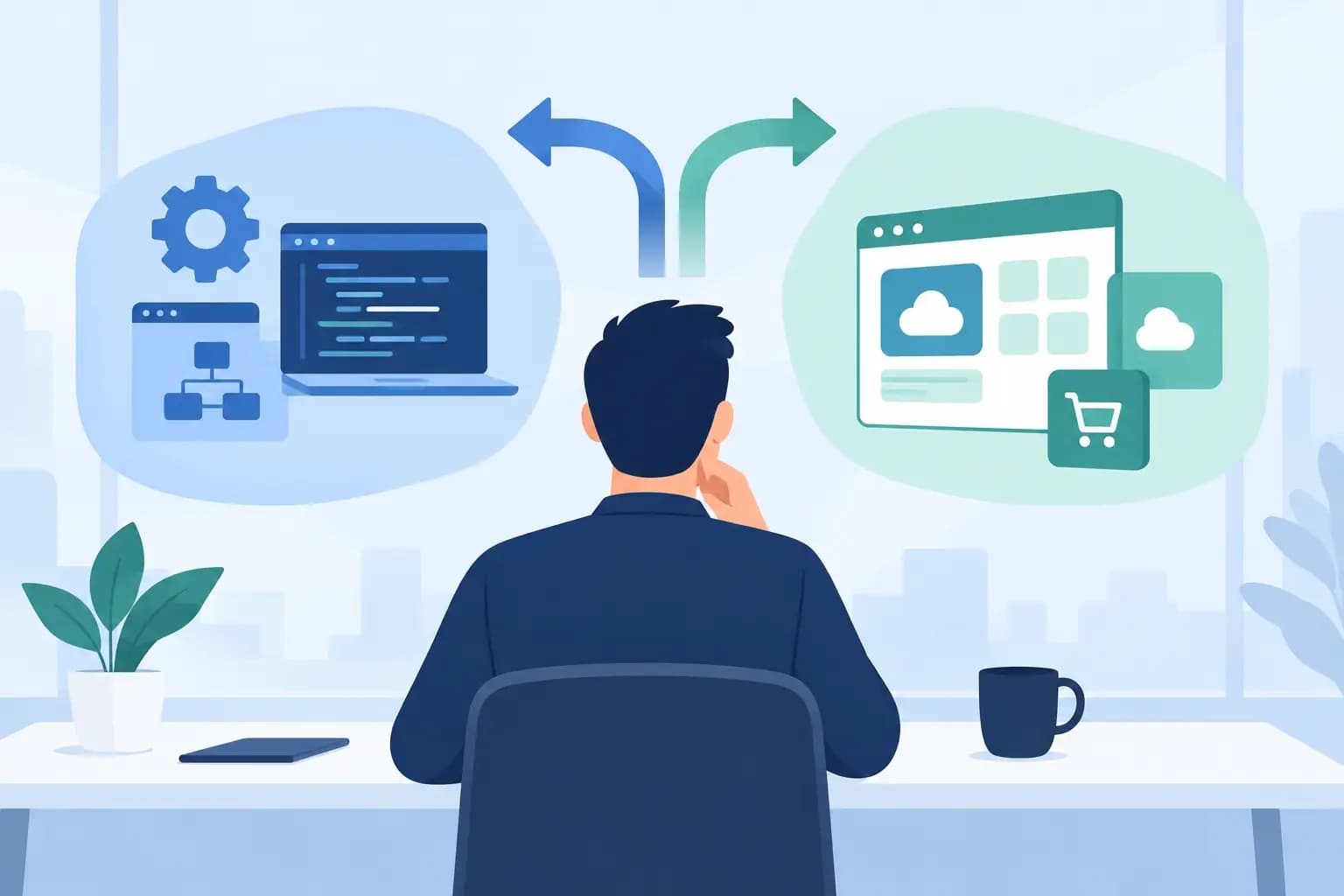
A promising product demo can make the build versus buy software decision look simple. It is not. The real question is whether the capability will become part of your company's advantage, operations, and risk profile - or whether it should remain a managed dependency.
For founders, product leaders, and operations executives, a wrong decision creates more than an avoidable expense. Buying a tool that cannot fit your workflows can preserve manual work and force teams into workarounds. Building too early can absorb senior engineering time, delay higher-value product work, and create a system no one planned to maintain. The right answer depends on the job the software must do over the next few years, not just what it can do this quarter.
Build versus buy software is a business decision
The usual framing is speed versus flexibility. That is directionally true, but incomplete. A better decision considers strategic control, operating model, integration requirements, security obligations, data ownership, and the cost of changing course.
Buying makes sense when the process is common, the available products support your essential requirements, and the vendor can carry much of the maintenance burden. Standard functions such as accounting, payroll, scheduling, support ticketing, and basic CRM administration are often better served by established software. The goal is not to recreate mature software simply because your team can.
Building makes sense when the workflow is central to how you win, when existing tools require costly compromises, or when the value comes from connecting systems in a way packaged software cannot support. This is common in internal operations platforms, customer portals, industry-specific workflows, proprietary data products, and product features that define the customer experience.
Neither path is permanent. Many growth companies begin with a purchased platform, then build a focused layer around it once the workflow and economics are proven. Others build a narrow first version to validate a differentiated process, then adopt managed components for identity, communications, analytics, or payments rather than owning every layer.
Start with the workflow, not the feature list
Feature comparisons are useful, but they can hide the operational problem. Before evaluating vendors or commissioning a build, map the workflow from trigger to outcome. Identify who performs each step, what data enters and leaves the process, where approvals happen, and where the team relies on spreadsheets, email, or manual re-entry.
That exercise often reveals that the requirement is smaller than expected. A team may not need a custom operations platform. It may need an integration that synchronizes data between two systems, an approval workflow, and a clear exception process. In other cases, it reveals the opposite: the apparent need for a simple tool is actually a complex, differentiated process that a generic platform will distort.
Ask a direct question: if this capability disappeared, would it materially weaken our revenue model, customer experience, delivery quality, or ability to operate at scale? If the answer is no, buying is usually the stronger default. If the answer is yes, determine precisely which parts create the advantage. Build those parts, not every adjacent capability.
Compare total cost of ownership, not purchase price
A subscription price is visible. The operational cost of making a tool work is often not. A build estimate is visible too, while the cost of maintaining the application after launch is easier to overlook. Both paths need a realistic total cost of ownership view.
For purchased software, account for implementation, data migration, configuration, integrations, training, administration, usage-based charges, support needs, and the cost of vendor limitations. If a process requires constant exports, duplicate data entry, or staff intervention, the subscription may be inexpensive while the operating model is not.
For custom software, include discovery, product design, development, quality assurance, cloud infrastructure, security controls, monitoring, documentation, support, future enhancements, and the internal ownership required to make decisions. The initial release is not the finish line. A system that handles business-critical operations needs a clear maintenance plan and accountable technical ownership.
Time matters as much as money. If a purchased product can remove a bottleneck within weeks, that can be the correct choice even if a custom system may become more economical later. Conversely, if a vendor solution will require months of configuration and still leaves your core process unresolved, a focused custom build may be faster in practical terms.
Evaluate control where it actually matters
Control is not an abstract preference. It becomes important when your business needs to change a workflow, customer experience, pricing model, or data model without waiting for a vendor's roadmap.
A custom application gives you control over behavior, integrations, user experience, and the pace of improvements. It also gives you responsibility. Your team must decide what to prioritize, maintain the codebase, keep dependencies current, and ensure the architecture remains understandable as the company grows.
Purchased software transfers part of that responsibility to a vendor, but it introduces constraints. Review how the product handles data export, API access, audit logs, permissions, service availability, and contract terms. A tool with a polished interface but limited integration access can become a bottleneck as soon as it needs to participate in a larger technology ecosystem.
Avoid treating vendor lock-in as automatically unacceptable. Some lock-in is a reasonable trade-off when a platform handles a non-differentiated function well. The problem is unexamined lock-in around a core business process, irreplaceable customer data, or a workflow that must evolve quickly.
Integration and data architecture often decide the answer
Many build-versus-buy decisions are really integration decisions. A purchased product may appear to satisfy the functional need, but fail because it cannot exchange the right data with your CRM, billing system, data warehouse, internal tools, or customer-facing product.
Define the source of truth for each important record before selecting a solution. Clarify whether the new system will create, read, update, or store customer, transaction, and operational data. Then test the real integration scenarios, including failures, duplicate records, permission changes, and exceptions. A vendor's integration directory is not proof that the workflow will work as required.
Custom development can create a clean integration layer and reduce repeated manual work. It can also create a fragile web of point-to-point connections if it is approached as a series of urgent fixes. The goal is to strengthen the technology foundation: establish clear ownership, dependable data flows, and interfaces that can change without breaking every downstream process.
Be precise about AI and automation
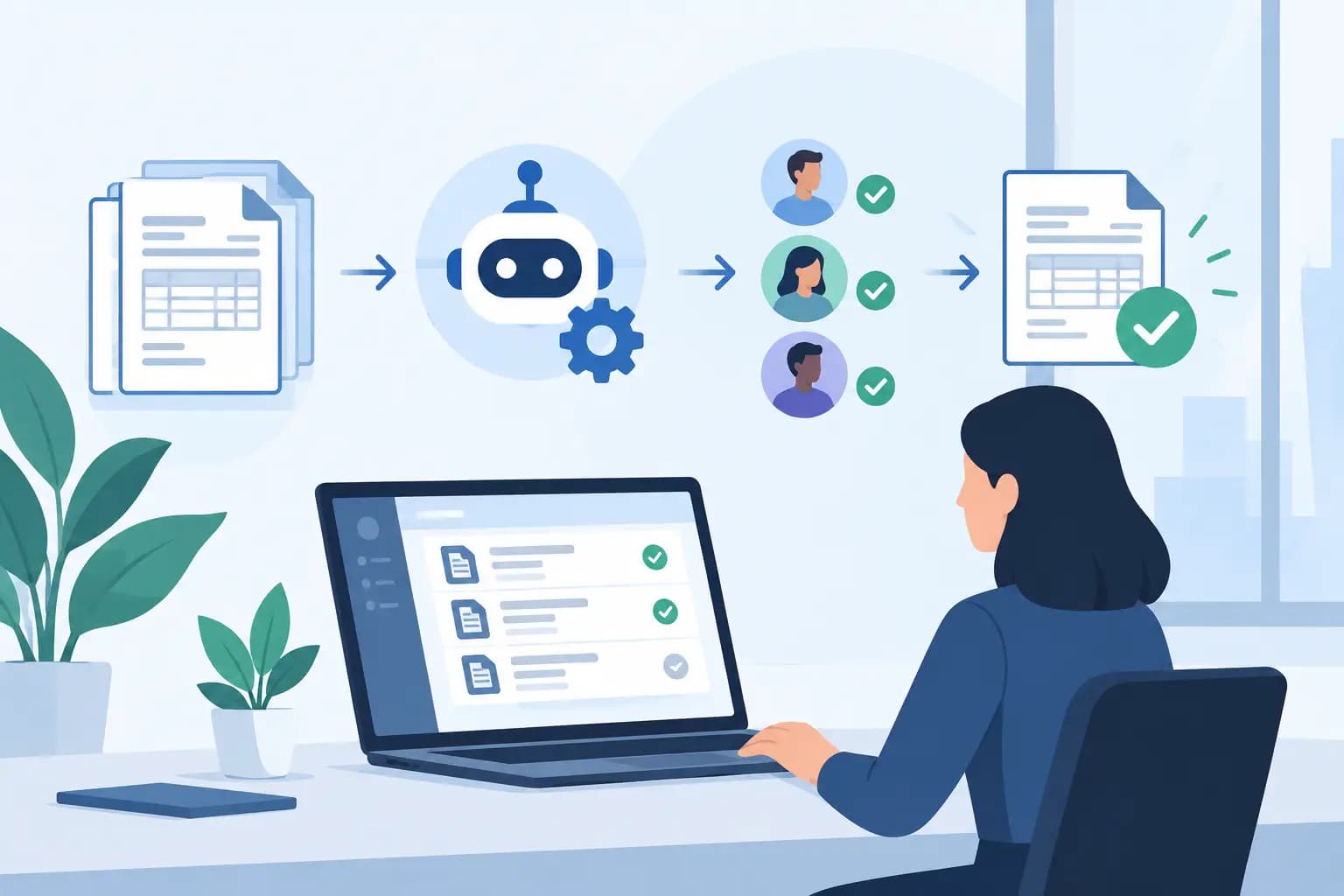
AI increases the number of situations where the answer is neither a full custom build nor a standalone software purchase. A company may buy a reliable system of record, then build an AI-enabled workflow around it to classify requests, prepare drafts, surface knowledge, or route work to the right team.
This approach can remove manual bottlenecks without replacing stable systems unnecessarily. But it still requires disciplined design. Teams need to define what data an AI system can access, where human review is required, how outputs are logged, what happens when confidence is low, and who owns ongoing evaluation.
Do not build an AI application merely because a vendor feature feels generic. Equally, do not assume a custom AI tool is necessary when a configurable platform meets the requirement safely. Start with a narrow workflow, a measurable operational objective, and an architecture that can be maintained after the initial enthusiasm fades.
A practical decision framework
When the choice remains unclear, score both options against the same criteria: strategic differentiation, time to value, fit with the workflow, integration depth, data and security requirements, long-term operating cost, internal ownership capacity, and ability to change as the business evolves.
The score alone should not make the decision. Its value is forcing stakeholders to state assumptions that otherwise remain hidden. A product leader may prioritize experience control, while an operations leader needs immediate reliability and a finance leader needs predictable commitments. Those are legitimate priorities, but they should be resolved explicitly rather than discovered after implementation begins.
For high-stakes decisions, use a short discovery phase to validate the workflow, technical constraints, and viable options. This can include architecture review, vendor assessment, prototype work, and an implementation roadmap. It is usually less expensive than committing to a platform or build based on a persuasive demo, an incomplete backlog, or a rough estimate.
Build the smallest durable solution
The best choice is often a hybrid. Buy the commodity capabilities that are already mature, then build the small number of workflows and interfaces that carry your operational advantage. This keeps senior engineering attention focused on the work that improves customer experience, supports growth, or reduces material risk.
SSO Agency approaches these decisions by connecting architecture and delivery choices to the business objective, then moving from assessment to implementation with senior technical guidance. The aim is not to make every system custom. It is to make sure the systems you own, configure, and integrate support the company you are becoming.
A useful final test is simple: choose the option your team can explain, operate, and improve twelve months from now. That discipline will produce a better decision than chasing the fastest demo or the most ambitious build.