SSO Agency · November 14, 2026
Investor Software Review Guide for Better Decisions
A software company can show strong demand, a credible team, and an appealing product demo while carrying technical problems that materially change the risk of an investment. The purpose of an investor software review guide is not to decide whether a company is worth backing. It is to expose the engineering, security, and execution realities that financial models and customer interviews cannot fully reveal.
For investors and acquisition teams, the question is rarely whether imperfections exist. Every growing software business has tradeoffs. The real question is whether the technology foundation can support the commercial plan, and whether the cost and time required to address weaknesses are understood before capital is committed.
What a Software Review Should Answer
A useful technical review translates code, infrastructure, and engineering practices into business decisions. It should establish whether the product can scale with expected customer growth, whether the team can ship reliably, and whether material risks have been identified and prioritized.
The output should be more than a list of technical findings. An investor needs to understand the operational consequence of each issue. For example, a tightly coupled application may slow product expansion. Weak access controls may increase enterprise sales friction. A single senior engineer holding critical system knowledge may create delivery and continuity risk.
This distinction matters because a polished interface is not evidence of a resilient platform. Nor is a large codebase proof of meaningful defensibility. Technical diligence should separate genuine product capability from accumulated complexity.
Investor Software Review Guide: The Core Areas
The depth of review should match the stage, transaction size, access available, and stated growth plan. A pre-seed company with a small engineering team should not be evaluated against the same operating model as a mature SaaS business serving enterprise customers. Still, several areas deserve attention in nearly every review.
Architecture and scalability
Start by understanding how the system works at a practical level. What are the core services, databases, third-party dependencies, and integration points? Which components are essential to the product, and which were added as temporary workarounds?
The goal is not to favor a particular technology stack. Proven, straightforward technology often creates less risk than a fashionable architecture that the team cannot maintain. Instead, assess whether the current design aligns with foreseeable needs: higher transaction volume, new product lines, larger customers, geographic expansion, or deeper integrations.
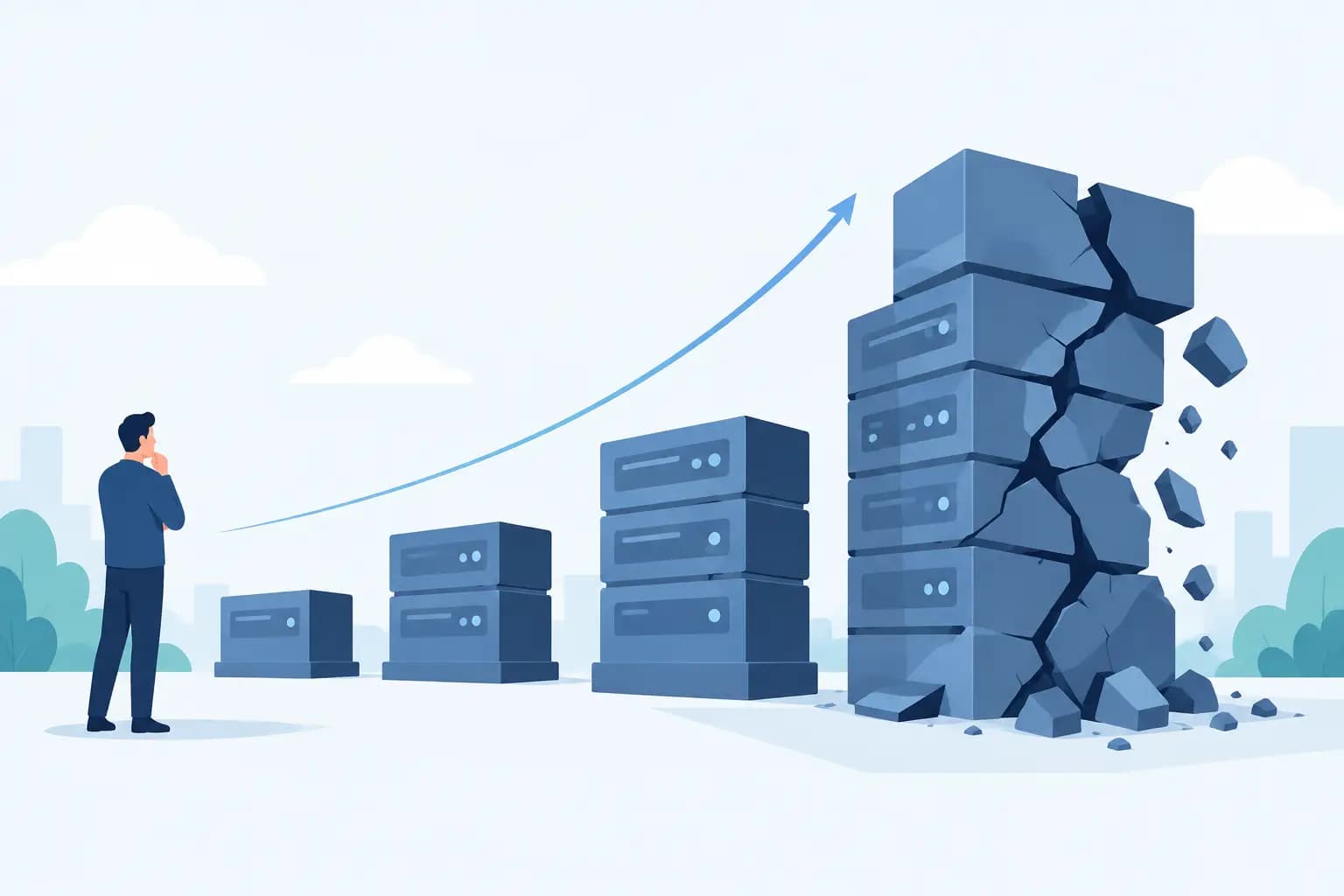
Look closely at bottlenecks that will surface under growth. These might include a database that cannot handle expected usage patterns, an application with no separation between customer-facing and administrative functions, or a workflow that relies on manual intervention behind the scenes. None automatically disqualifies a company. Each should inform the execution roadmap and post-investment plan.
Code quality and technical debt
Technical debt is not simply old code. It is the accumulated cost of decisions that make future changes slower, riskier, or harder to predict. Some debt is rational, particularly when a company needed to validate a market quickly. The concern is unmanaged debt that has become a permanent operating constraint.
A review should examine whether the codebase is understandable, testable, and actively maintained. Are critical areas covered by automated tests? Can engineers make changes without repeatedly breaking unrelated features? Is documentation sufficient for a new senior engineer to become productive? Are known issues tracked and prioritized, or does the team rely on institutional memory?
The commercial impact is straightforward. When feature work requires increasingly long cycles, product strategy becomes harder to execute. When every release carries a high risk of regression, customer experience and retention can suffer. Technical debt becomes a business issue when it prevents the company from responding at the speed its market requires.
Security, privacy, and access control
Security diligence should focus on the risks created by the company’s product, data, customers, and operating model. A business handling sensitive customer information or selling into regulated industries will need stronger controls than an early product with limited data exposure. But basic weaknesses can create avoidable risk at any stage.
Review how the company manages authentication, authorization, secrets, backups, encryption, production access, and incident response. Confirm who can access sensitive systems and whether access is routinely reviewed. Understand where customer data is stored, how it moves between systems, and which external vendors process it.
A lack of formal policies does not necessarily mean the team is careless. Small companies often build process later than they should. What matters is whether leadership understands the gaps, has a credible plan to address them, and can make the necessary changes without destabilizing delivery.
Infrastructure and operational resilience
Production reliability is often invisible until it fails. Review the deployment process, monitoring, logging, alerting, backup strategy, and recovery procedures. Ask whether the team can detect a customer-impacting issue quickly, identify its cause, and restore service with confidence.
It is also worth examining cloud spending and vendor concentration. An infrastructure bill that rises faster than revenue may point to an efficiency problem. Heavy dependence on one external platform may be reasonable, but the dependency should be documented and understood. The issue is not that third-party services exist. It is whether the company has assessed their failure modes, commercial terms, and alternatives.
Engineering team and delivery capability
Software is maintained by people, not diagrams. A sound assessment evaluates the team’s ability to plan, build, review, release, and support the product. Consider the balance of seniority, ownership of critical systems, hiring plans, development workflow, and relationship between product and engineering leadership.
Key-person risk deserves direct attention. If one founder or contractor is the only person who understands core infrastructure, billing logic, or customer integrations, that is a material operating risk. It may be manageable, but it should lead to a clear knowledge-transfer and documentation plan.
Review delivery evidence rather than relying only on roadmaps. Are releases predictable? Does the team have a structured backlog? Are production issues analyzed and used to improve process? Strong teams do not avoid every incident. They learn quickly, communicate clearly, and reduce the chance of repeat failures.
How to Turn Findings Into an Execution Roadmap
The value of technical diligence is lost when findings become a long, unranked spreadsheet. Investors and operators need a practical view of what to address first, what can wait, and what resources are required.
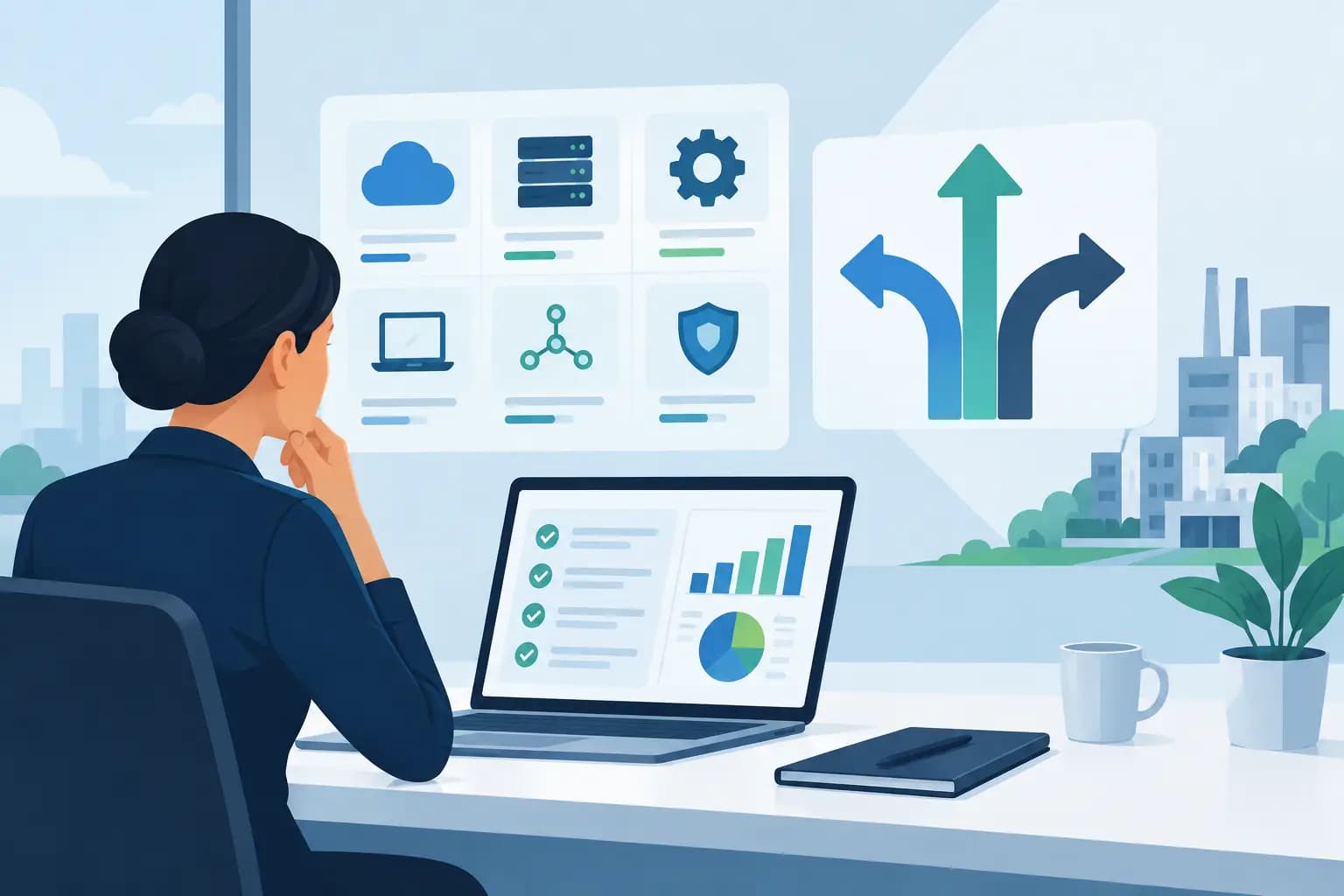
A useful roadmap separates findings into three groups: immediate risks that could affect security, continuity, or a near-term transaction; growth constraints that may limit product expansion or enterprise readiness; and longer-term improvements that strengthen maintainability without blocking current objectives. Each item should include a business implication, recommended action, likely dependencies, and an accountable owner.
Avoid treating every finding as a request for a rebuild. A full rewrite is expensive, disruptive, and frequently unnecessary. In many cases, the stronger path is targeted modernization: stabilize critical workflows, improve test coverage around high-risk areas, reduce manual operational work, strengthen access controls, and gradually separate components that are limiting change.
The right approach depends on the company’s timeline. If a product has strong market pull and fragile engineering, the priority may be adding senior capability while protecting delivery momentum. If an acquisition depends on integrating systems within months, integration architecture and data quality may deserve the earliest attention. The assessment should support those decisions rather than prescribe technology for its own sake.
Common Review Mistakes to Avoid
One common mistake is evaluating technology only through a checklist. Checklists are useful, but they do not explain whether a gap is material in context. Missing automated tests in a low-risk internal tool is different from missing tests in a revenue-critical payments workflow.
Another is treating technical maturity as a proxy for investment potential. Early-stage companies often have rough edges by design. The more relevant measure is whether the company has made deliberate tradeoffs, recognizes its constraints, and can execute a realistic plan to strengthen the foundation as it grows.
Finally, avoid separating technical diligence from commercial diligence. Product strategy, customer concentration, sales commitments, data requirements, and integration promises all shape technical risk. The best review brings these inputs together and turns them into decisions leaders can act on.
A well-run software review gives investors a clearer view of what they are funding: not just the product as it appears today, but the engineering effort required to support the business it is expected to become. That clarity creates a better starting point for prioritizing capital, leadership attention, and the work needed to build and ship with confidence.