SSO Agency · November 12, 2026
Custom Versus Packaged Software for Growth
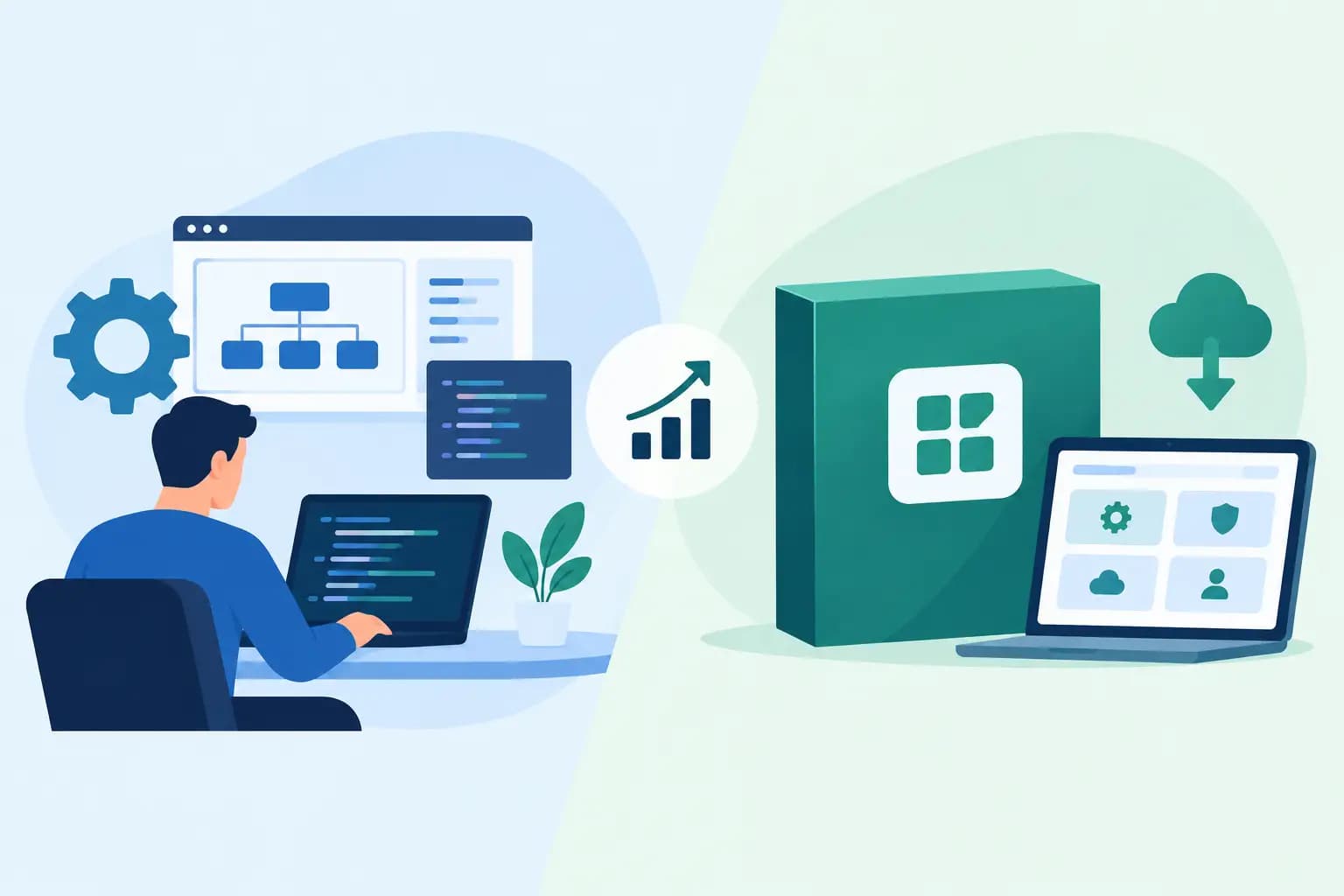
A packaged platform can get a team operating by next month. A custom system can remove the workflow constraints that would otherwise slow the business for years. The custom versus packaged software decision is not really about whether one option is more sophisticated. It is a decision about where your company needs speed, where it needs control, and which constraints it can afford to live with.
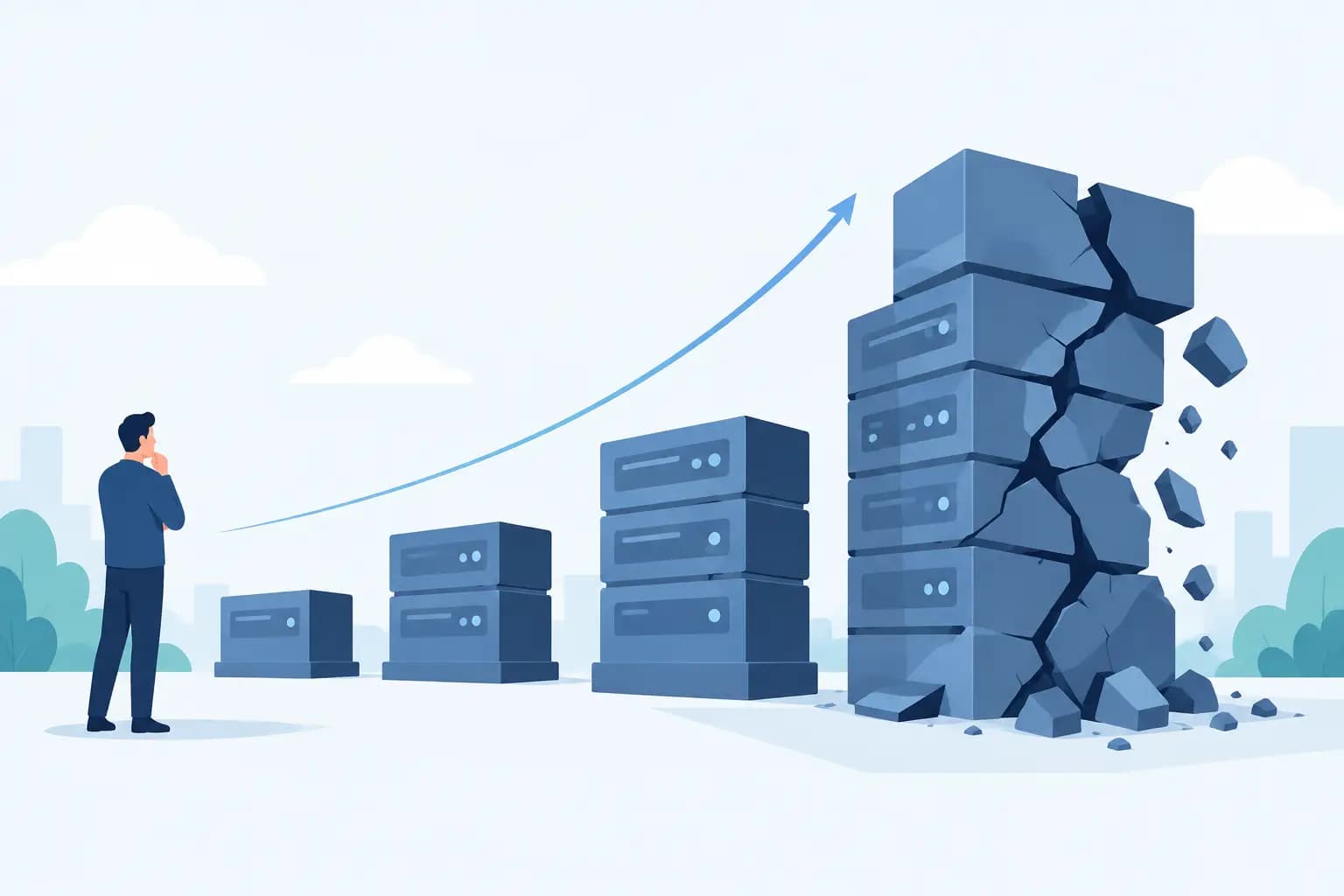
For a startup, scaleup, agency, or established growth company, the wrong choice creates more than an inconvenient software rollout. It can produce manual workarounds, disconnected data, fragile processes, and a technology foundation that becomes expensive to change just as the business gains momentum. The right choice is the one that supports the operating model you are building - not just the problem in front of you.
Custom Versus Packaged Software: Start With the Business Constraint
Packaged software is a product built to serve a broad category of users. Think CRM platforms, project management tools, accounting systems, help desk products, and marketing automation platforms. The vendor defines the core workflows, maintains the infrastructure, ships updates, and provides integrations within its ecosystem.
Custom software is designed around a specific business need. It may be an internal operations platform, customer portal, workflow engine, data integration layer, specialized product feature, or a new software product. Your team controls the roadmap and can shape the system around the way the business creates value.
That distinction matters because many teams frame the question incorrectly. They ask, “Can this platform do what we need?” A better question is, “Will this platform support the way we need to operate as we grow?”
A platform may technically cover 80 percent of a process. But if the remaining 20 percent involves revenue-critical approvals, customer onboarding, fulfillment logic, compliance controls, or proprietary delivery methods, the workaround may become the real operating system. Employees move data between tools, managers approve exceptions in email, and reporting becomes a monthly reconstruction exercise.
The goal is not to avoid packaged tools. Most well-run companies use them extensively. The goal is to identify where standardization is an advantage and where it starts imposing operational cost.
When Packaged Software Is the Better Decision
Packaged software is usually the right starting point when the underlying process is common, stable, and not central to how you compete. Payroll, basic CRM activity tracking, standard support ticketing, and common project workflows are often better served by mature products than by a ground-up build.
The immediate advantages are clear. You can deploy faster, rely on features tested across many customers, and reduce the internal responsibility for infrastructure, security updates, and routine maintenance. A good platform also creates useful constraints. Instead of spending months debating how a standard process should work, the team can adopt proven patterns and focus its energy elsewhere.
This is especially valuable when a company is still validating its operating model. Building custom software around a process that changes every quarter is a costly way to preserve uncertainty. A configurable platform can give leadership time to learn what actually needs to be differentiated.
However, “configurable” deserves scrutiny. Configurations are manageable when they remain understandable, documented, and supported by the platform. They become risky when the business depends on a patchwork of plugins, scripts, spreadsheets, and one person who knows why a particular automation exists.
Before committing to a packaged system, examine the integration model, data access, permission controls, reporting limits, export options, vendor roadmap, and total administrative burden. The subscription is only one part of the decision. The real cost includes implementation, change management, workarounds, integration maintenance, and the effort required when the platform no longer fits.
When Custom Software Creates a Better Foundation
Custom development becomes more compelling when a workflow is strategically important, unusually complex, or repeatedly constrained by off-the-shelf tools. It is often the right path when the company has proven demand and needs technology to support a clear next stage: expanding a product, serving enterprise customers, scaling operations, or reducing a persistent manual bottleneck.
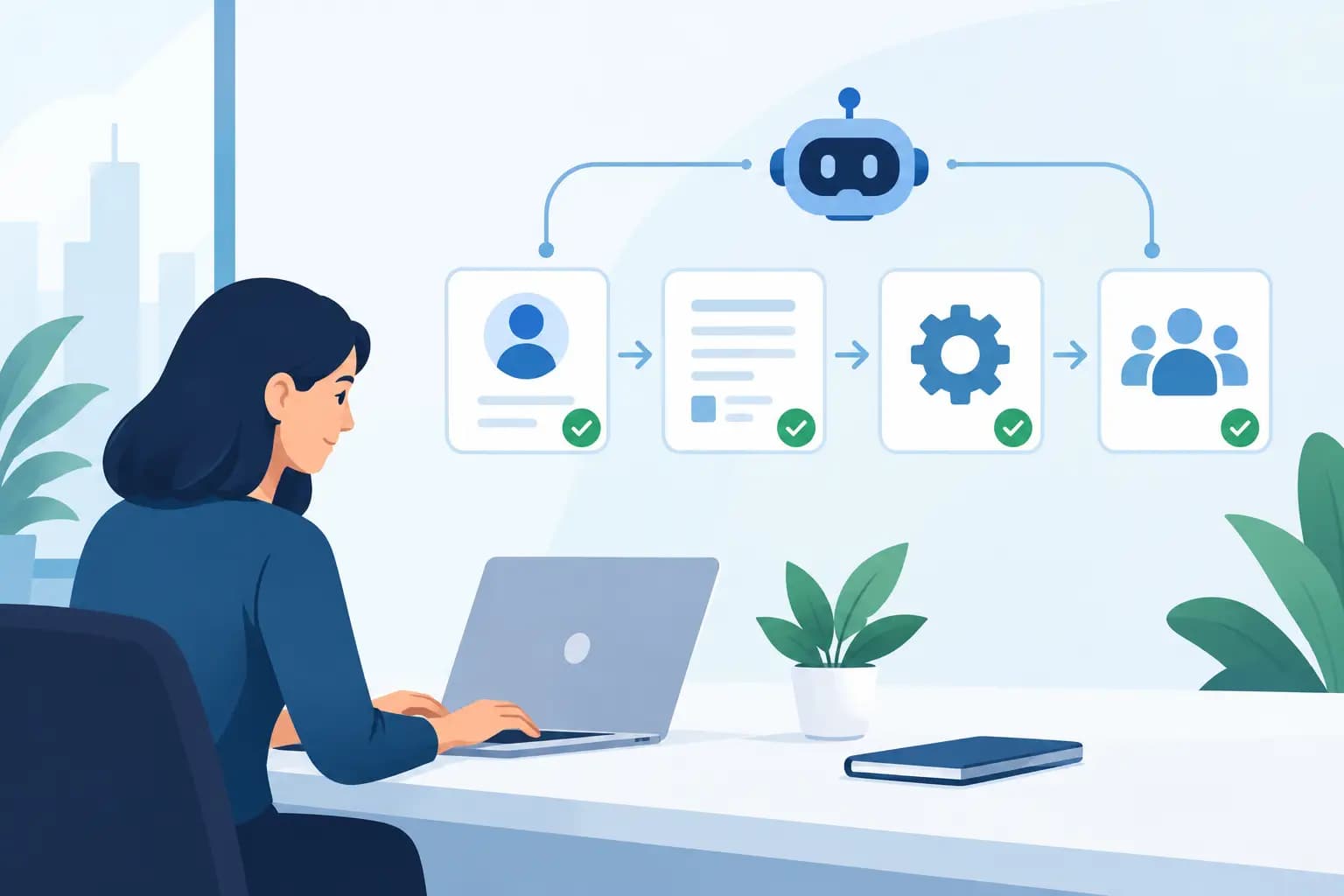
A custom system can consolidate fragmented workflows and make data available where it is needed. For example, an agency may need a client portal that brings project status, approvals, deliverables, and reporting into one experience. A services business may need an internal platform that coordinates intake, routing, quality checks, and delivery across multiple systems. A SaaS company may need product capabilities that cannot be achieved through plugins without compromising performance or user experience.
Custom software also gives you control over the data model and the roadmap. That does not mean every feature should be built internally. It means the parts of the system that encode your differentiated process are not limited by another company’s release cycle or pricing model.
That control comes with responsibility. A custom application needs product ownership, architecture decisions, security practices, testing, monitoring, documentation, and ongoing maintenance. The risk is not that custom software is inherently too expensive. The risk is building too much too early, or building without a clear definition of the problem, users, and measurable operational outcome.
The strongest custom projects begin with a narrow, high-value scope. They solve a defined constraint, integrate with the systems that should remain packaged, and leave room for the product to evolve. This approach reduces technical and operational risk while giving the business something useful to test in production.
The Hidden Cost Is Usually Complexity
The most expensive technology choice is often not the one with the largest initial budget. It is the one that creates complexity no one owns.
With packaged software, complexity can hide in subscriptions, overlapping tools, custom fields, manual exports, and integration dependencies. With custom software, it can hide in unclear requirements, weak documentation, rushed architecture, or a codebase designed for a short-term launch but expected to support long-term growth.
Leaders should evaluate both paths through the same lens: What will this decision require from our team over the next 12 to 24 months? That includes engineering capacity, operations ownership, vendor management, training, security review, and the ability to adapt when the business changes.
A useful test is to map the current workflow from trigger to outcome. Identify every handoff, spreadsheet, duplicate entry, approval delay, and point where someone has to interpret inconsistent information. Then separate issues caused by poor process design from issues caused by the technology itself. Building software around an unclear process does not remove the confusion. It merely makes it more expensive to change.
A Practical Decision Framework
There is no universal answer to custom versus packaged software, but four questions bring the decision into focus:
- Is this capability central to how we win customers, deliver value, or protect margin?
- Can a packaged tool meet the requirement without fragile workarounds or critical compromises?
- Is the underlying process stable enough to justify building around it?
- Do we have a clear owner and a realistic plan for maintaining the solution after launch?
If the capability is common and the process is still evolving, start with a packaged platform. If it is core to your customer experience or operating advantage, and the process is understood, custom development may be the more disciplined investment.
There is also a practical middle ground. Many companies keep established systems for CRM, finance, communication, and analytics while building custom layers that connect them. An integration service, internal operations console, customer portal, or AI-enabled workflow can remove the manual bottlenecks without attempting to replace every tool in the stack.
Build for the Decision You Need to Make Next
The choice does not need to be permanent. A packaged platform can be the right move before product-market fit or during a period of rapid process change. Custom software can become appropriate later, when workarounds begin consuming too much time, data is fragmented, or the customer experience needs more control.
What matters is making the decision deliberately. A technical assessment can clarify where the current stack supports growth, where it creates execution risk, and which investments deserve priority. At SSO Agency, that work is treated as a business decision first: understand the constraint, define the smallest credible path forward, and build only where custom technology creates lasting value.
The useful question is not whether your company should buy or build. It is whether your technology is helping capable people move work forward or forcing them to work around it. That answer usually points to the next investment worth making.