SSO Agency · October 7, 2026
What an AI Readiness Assessment Review Reveals
A promising AI idea can still be the wrong first project. A customer support assistant may sound compelling, for example, but it will create little value if the underlying knowledge base is incomplete, customer data is fragmented, and the team has no process for handling exceptions. An AI readiness assessment review separates attractive concepts from initiatives your organization can build, govern, and maintain.
For founders, operations leaders, product teams, and agency owners, the purpose is not to score how advanced the company appears. It is to make a clear business decision: where can AI or automation remove meaningful friction now, what needs to be strengthened first, and what should wait?
What an AI readiness assessment review should answer
A useful review examines the business operation before recommending models, vendors, or interfaces. AI is rarely the starting point. The starting point is a costly manual process, an unreliable handoff, a slow response cycle, or a missed opportunity to use information the company already holds.
The assessment should answer four practical questions. Where is work repetitive, slow, error-prone, or difficult to scale? Is the required data available, accurate, and accessible with appropriate permissions? Can the current systems support an integration without creating a fragile workaround? And does the business have an owner who can define success, make decisions, and operate the new workflow after launch?
These questions matter because AI projects fail in different ways. Some produce impressive demonstrations but do not fit the daily workflow. Others depend on data that is not trustworthy enough for the decision being automated. Some solve a real problem but introduce security, maintenance, or review requirements the team did not budget for. A readiness review brings those constraints into the open while the cost of changing direction is still low.
Start with the workflow, not the model
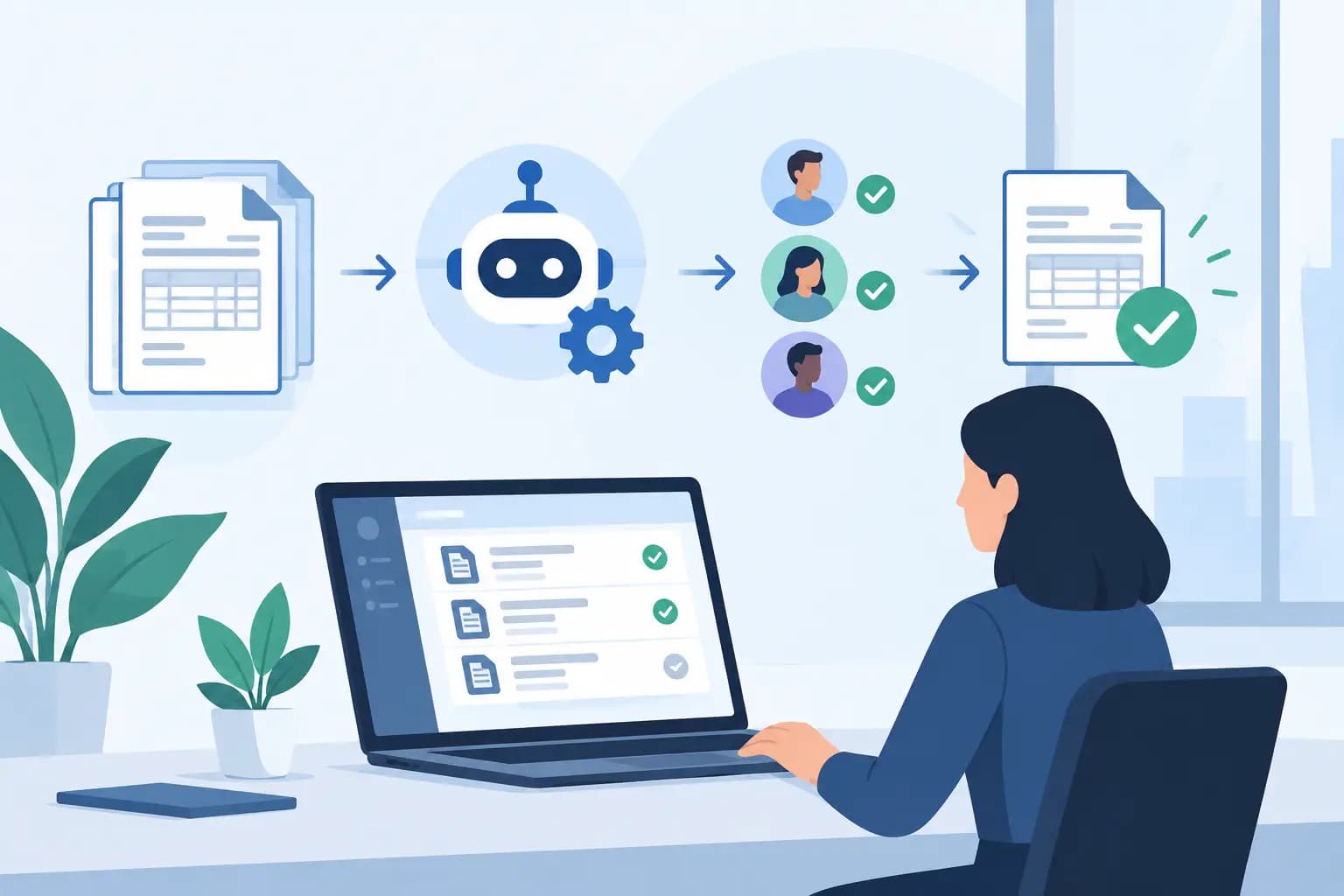
The most valuable opportunities tend to sit inside a defined process with a measurable bottleneck. Consider an operations team that receives similar requests through email, forms, and a CRM. Staff members read each request, identify its type, gather details from several systems, route it to the right person, and send a status update. An AI-enabled workflow may classify the request, extract key fields, prepare a response draft, and trigger the correct next step.
That is a stronger candidate than a broad request to “add AI to operations.” The problem is concrete, the human effort is visible, and the boundaries of automation can be designed deliberately.
A review should map the current state in enough detail to expose variation. Who starts the process? Which systems are touched? Where do people copy and paste information? What judgment calls occur? What happens when the usual path fails? A workflow with many exceptions may still be a good opportunity, but it may require human review rather than fully automated action.
This distinction is central. AI can assist, recommend, classify, summarize, extract, draft, and route work effectively. It should not be given authority over high-impact decisions merely because a prototype appears capable. The right level of autonomy depends on error tolerance, reversibility, customer impact, and the availability of a human escalation path.
Evaluate data, systems, and security together
AI is only as useful as the context it can reliably access. That does not mean every organization needs a perfect centralized data platform before taking action. It does mean the data needed for a specific use case must be identified, permissioned, and evaluated honestly.
For each priority workflow, examine where the source information lives, who owns it, how current it is, and whether records are consistently structured. Customer notes with inconsistent terminology may still support summarization. They may not support automatic routing without a validation step. Product documentation spread across outdated folders may support internal search only after cleanup and clear source controls.
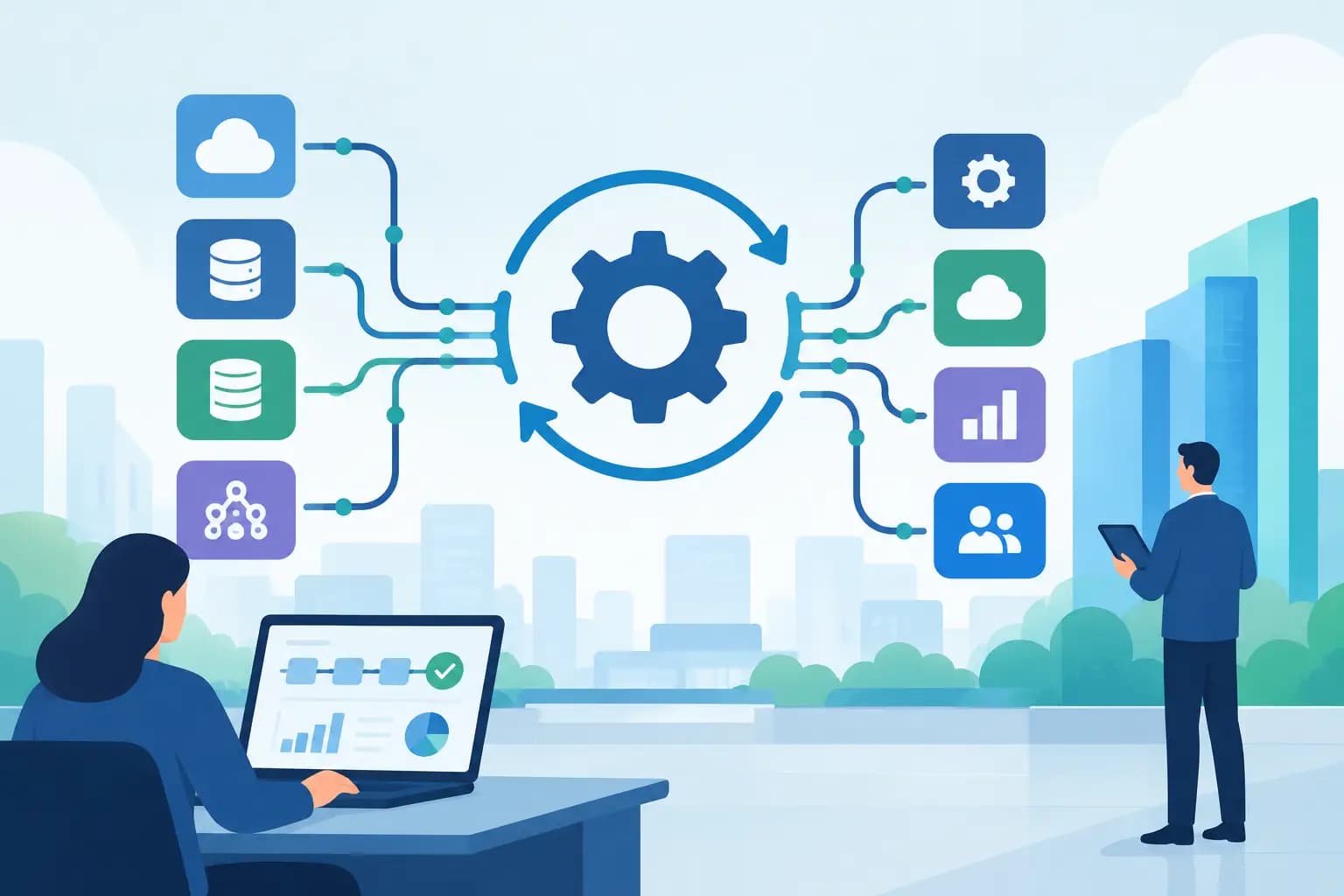
System architecture matters just as much. A practical initiative may require APIs, webhooks, integration middleware, a custom service layer, or changes to a legacy application. The assessment should identify these dependencies before anyone promises a timeline. Building around missing access can be reasonable for a pilot, but it is rarely a sound long-term foundation.
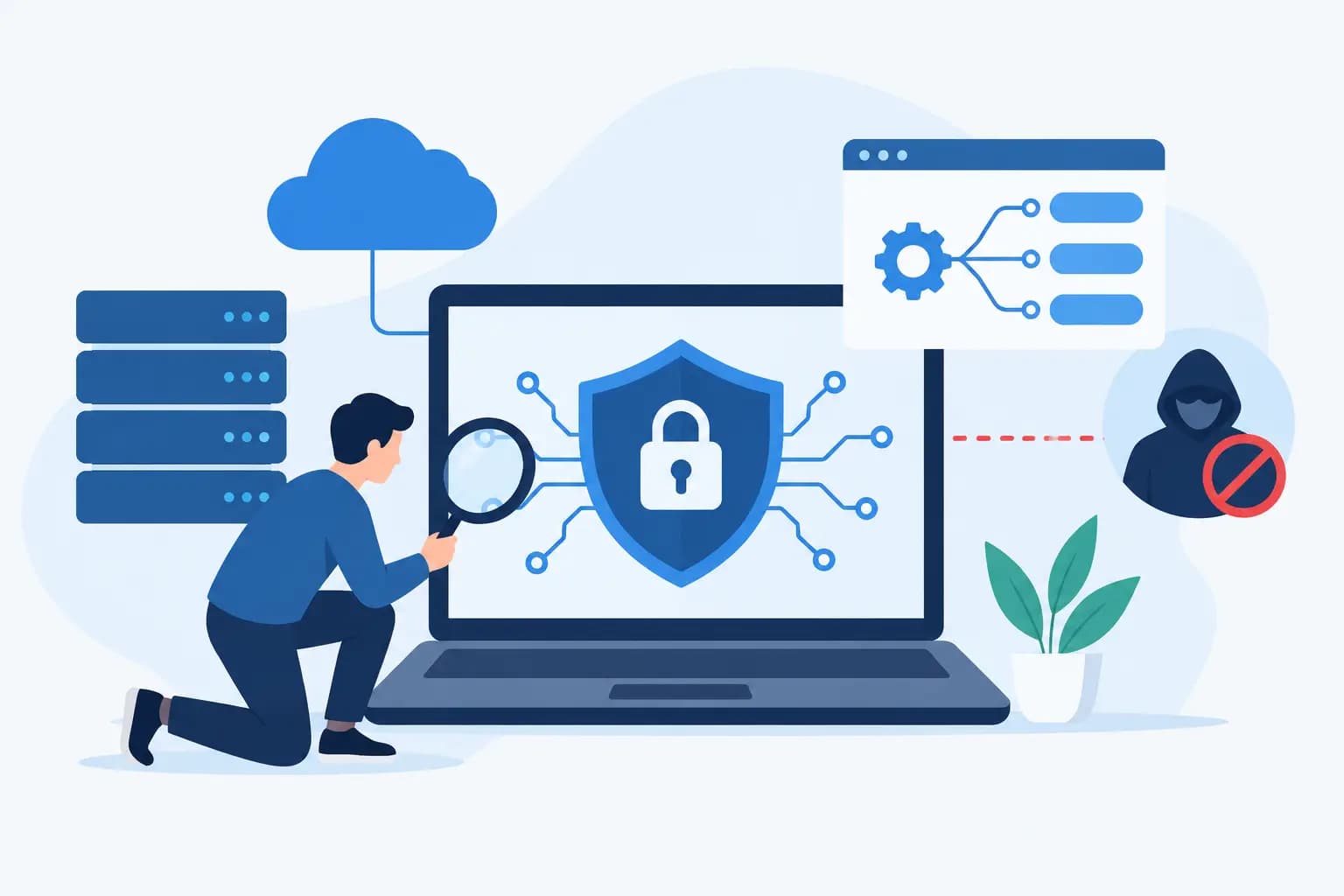
Security and governance should be designed into the use case, not appended near launch. Review what information the workflow handles, whether it includes sensitive customer or employee data, which users need access, how prompts and outputs are logged, and how data retention is managed. Also define when human approval is mandatory and how incorrect outputs are reported and corrected.
These controls are not bureaucracy. They protect the business from operational surprises and make it easier to expand a successful workflow with confidence.
Assess the team’s ability to operate what it builds
Readiness is not only technical. An organization can have usable data and capable systems yet struggle because no one owns process decisions. AI projects cross functions: operations knows the work, product understands user experience, engineering owns integrations, and leadership sets risk tolerance and priorities.
A strong assessment identifies the executive sponsor, operational owner, technical owner, and end users for each initiative. It also tests whether they agree on the current problem. If sales wants faster lead follow-up while operations is concerned about duplicate records and engineering is planning a CRM migration, the sequencing must reflect all three realities.
Change management can be lightweight, but it cannot be absent. Teams need a clear explanation of what the workflow will do, what remains their responsibility, and how to raise exceptions. Adoption is more likely when the new process removes a specific pain point rather than adding another tool to monitor.
Prioritize by value, feasibility, and risk
An AI readiness assessment should end with a ranked portfolio, not a long list of possibilities. The best first project is usually not the most ambitious. It is the opportunity with meaningful business value, workable inputs, a manageable integration path, and a clear way to measure whether it improves the process.
A useful prioritization discussion weighs several factors:
- Business impact: time saved, faster customer response, reduced rework, improved throughput, or better decision support.
- Feasibility: data quality, system access, workflow clarity, and technical effort.
- Operational risk: the consequence of an incorrect output and the quality of available review controls.
- Maintainability: who will monitor, update, and support the solution as systems and policies change.
Not every high-value idea should be first. A revenue-facing assistant with broad system dependencies may deserve further discovery while an internal document intake workflow becomes the initial implementation. The smaller project can establish integration patterns, governance practices, and team confidence without delaying the larger opportunity.
Turn findings into an execution roadmap
The review has limited value if it ends as a slide deck. Its output should be a roadmap that connects business priorities to delivery decisions. Each recommended initiative needs a defined problem statement, scope, responsible owners, required data and integrations, approval rules, success measures, delivery phases, and known risks.
A sensible roadmap usually separates immediate improvements from foundation work. Immediate opportunities may include structured intake, automated document extraction, internal knowledge search, response drafting, or workflow routing with human approval. Foundation work may include cleaning source data, improving system integrations, documenting processes, establishing access controls, or reducing technical debt in a critical application.
This sequencing prevents a common mistake: treating AI as a layer placed on top of unresolved operational problems. Sometimes the right recommendation is to automate a deterministic process without AI. Sometimes the right move is to modernize an integration before introducing an assistant. That is not a weaker outcome. It is how organizations avoid unnecessary complexity and direct investment toward work that can be sustained.
At SSO Agency, this is the standard we apply when evaluating AI and automation opportunities: connect technical findings to business priorities, challenge weak assumptions early, and create a path from assessment to implementation. With senior engineering and AI architecture input, the focus stays on solutions a team can realistically build and ship.
When a company is not ready yet
“Not ready” should not be treated as a dead end. It is often a precise diagnosis. If the assessment finds disconnected systems, unclear workflows, unreliable data, or unresolved access controls, those findings become the first items on the roadmap.
The organization may be ready for a contained pilot while not ready for broad deployment. It may be ready for internal assistance but not customer-facing automation. It may be ready to improve a single process while a larger platform rebuild is still underway. Good decisions come from recognizing these differences instead of forcing a company-wide AI strategy prematurely.
The goal is not to adopt AI quickly enough to satisfy a trend. It is to remove the right bottleneck, reduce technical and operational risk, and establish a stronger foundation for the next decision. Start with the work that matters, make the constraints visible, and build from there.