SSO Agency · July 23, 2026
AI Consulting That Moves Operations Forward
A sales team should not need three spreadsheets, a Slack thread, and an operations manager to determine whether a qualified lead received a follow-up. Yet this is how growth slows inside many otherwise capable companies. The issue is rarely a lack of software. It is a lack of connected systems, clear ownership, and practical AI consulting that turns a business bottleneck into a working solution.
For growth-stage companies, AI is not a side project or a novelty to demonstrate at an offsite. It can reduce manual work, improve decision speed, and give teams capacity to serve more customers without adding equivalent overhead. But those outcomes depend on choosing the right workflows, protecting the right data, and building technology that people will actually use.
AI Consulting Starts With the Bottleneck
The strongest AI initiatives do not begin with a model comparison. They begin with a specific operating problem: support tickets are routed inconsistently, account research takes too long, proposals require repetitive customization, or critical data is trapped across CRM, billing, and project-management systems.
That distinction matters because a tool can produce an impressive demo while failing to improve the underlying operation. If the source data is incomplete, the workflow has no defined owner, or the output still requires extensive manual review, the company has added another layer of work rather than removed one.
Effective AI consulting connects business goals to technical decisions. It asks what a team needs to accomplish, where time or revenue is being lost, what decisions can be supported by AI, and where human approval must remain in place. The output is not a vague innovation plan. It is a prioritized path to build, test, measure, and scale.
For a founder, that means clearer investment decisions. For a CTO, it means an architecture that will not create new security or maintenance problems. For an operations leader, it means a workflow designed around the reality of how work moves through the business.
What an AI Consulting Engagement Should Deliver
A useful engagement creates enough clarity to make decisions and enough momentum to ship. Strategy without implementation often becomes a polished document that teams revisit when the next planning cycle arrives. Building without assessment can produce automation that solves the wrong problem.
The right balance depends on the company’s stage. A startup preparing to scale may need a fast assessment of its data flows, product architecture, and highest-value automation opportunities. A more established company may need to replace an expensive manual process that spans several teams and legacy systems. An agency may need an internal AI workflow that improves delivery margins without compromising client data.
In each case, the deliverables should be concrete: a map of the current workflow, an assessment of data quality and integration constraints, a ranked backlog of opportunities, an implementation plan, and clear success measures. The measures matter. A workflow that saves ten minutes per task may be valuable, but only if it happens often enough, requires little rework, and does not shift risk to another part of the organization.
A capable partner also identifies what should not be automated. Customer escalation, financial approvals, sensitive legal communication, and high-stakes product decisions may benefit from AI-assisted preparation, but they often require a person to remain accountable for the final call. This is not a limitation of the project. It is responsible system design.
Where AI Creates Measurable Value
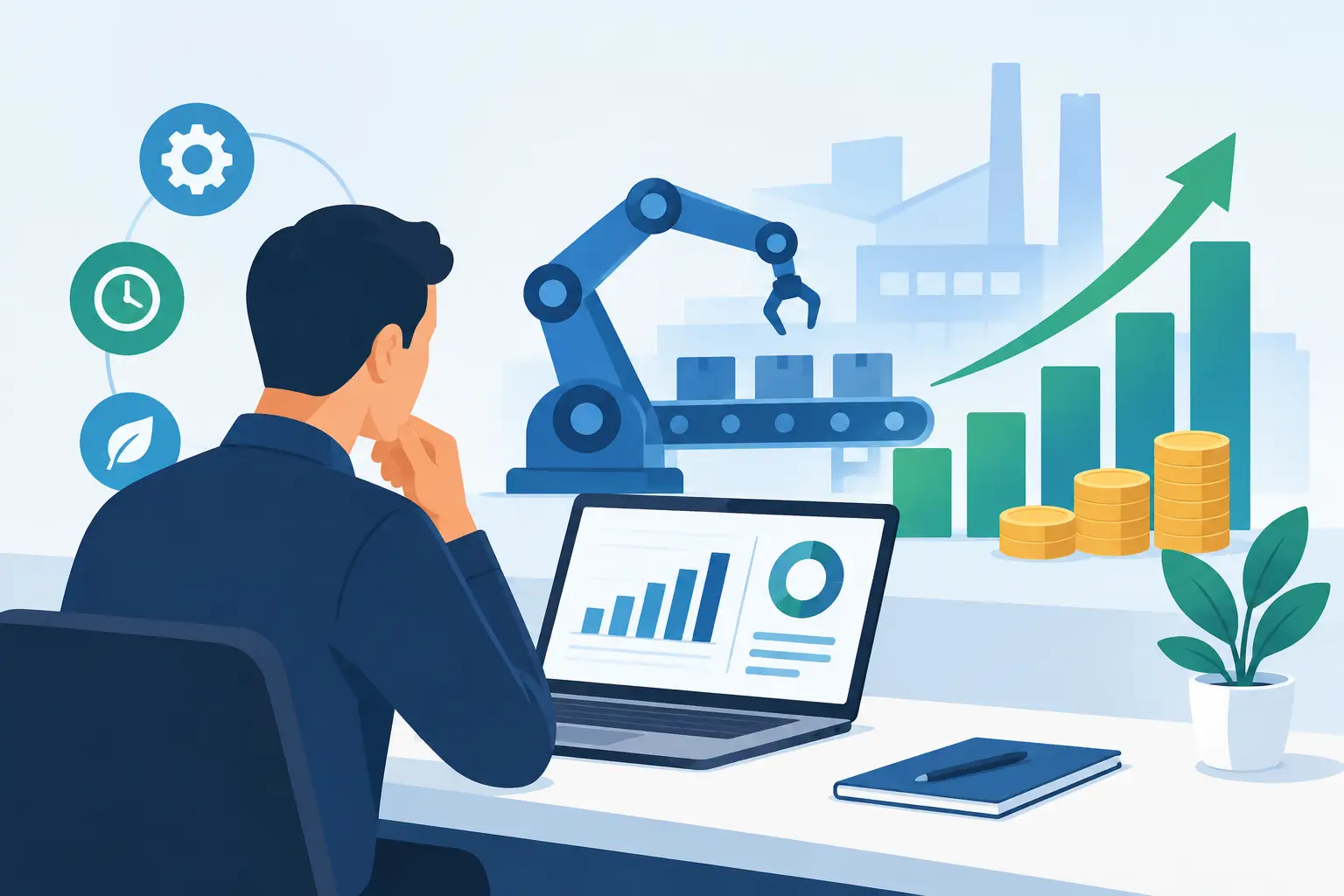
AI produces the strongest return when it is embedded in recurring, high-volume work with clear inputs and a measurable outcome. The opportunity is often less glamorous than a customer-facing chatbot, but far more valuable to operations.
Common high-impact use cases include:
- Lead qualification and routing based on CRM activity, form submissions, firmographic data, and buying signals.
- Support triage that classifies requests, drafts responses, retrieves relevant account context, and routes exceptions to the right specialist.
- Document and proposal workflows that extract information, generate first drafts, and apply approved business rules before review.
- Internal knowledge systems that help teams find current policies, project history, product documentation, and delivery standards without searching across disconnected tools.
- Finance and operations workflows that flag anomalies, reconcile data between systems, and prepare recurring reports for human approval.
The best starting point is usually the process that is painful enough to have an owner, frequent enough to generate meaningful savings, and structured enough to improve through automation. A low-volume, highly variable process may still benefit from AI, but it is usually not the first place to invest.
Strategy Alone Will Not Change the Operation
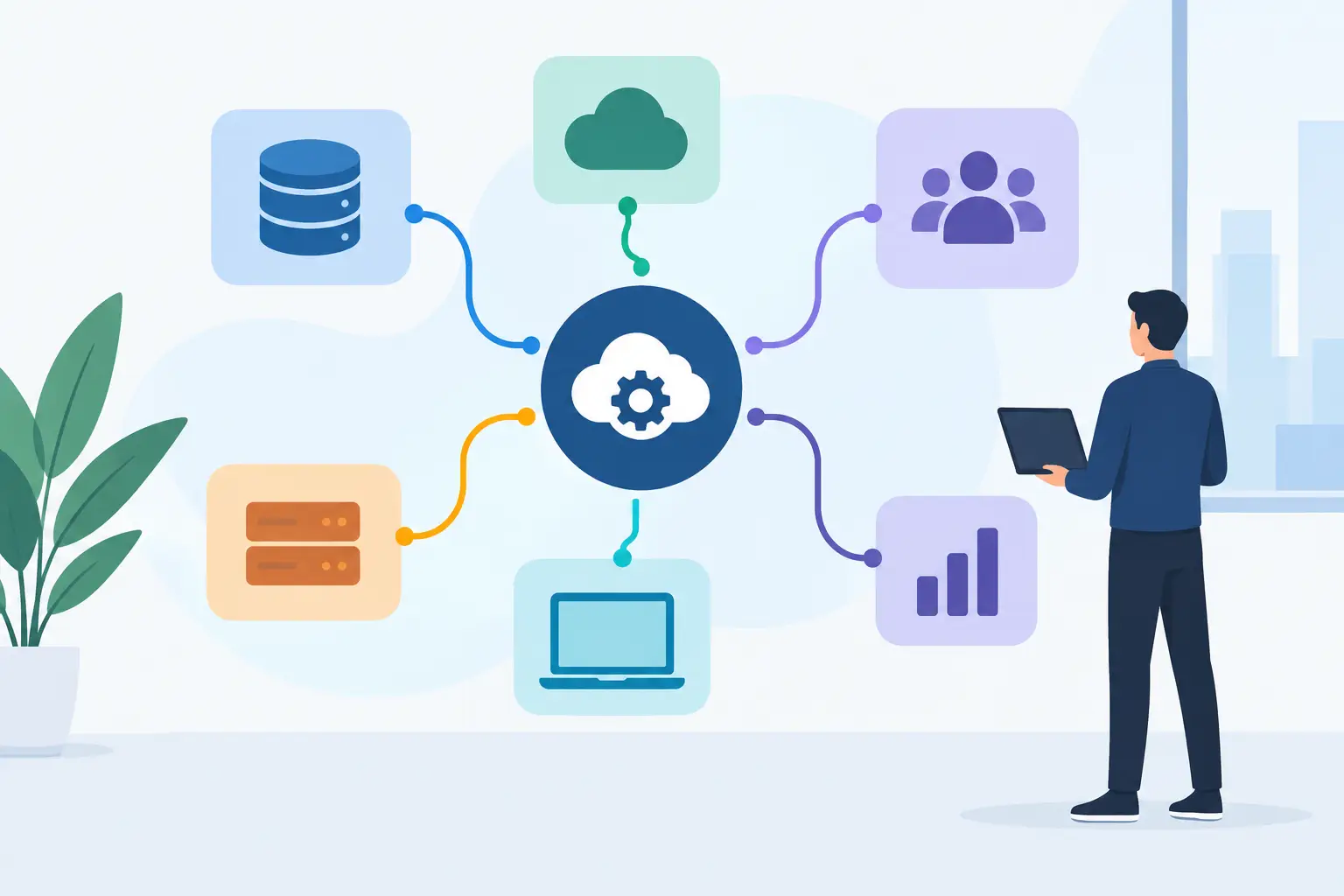
Companies often underestimate the implementation work behind an AI initiative. A useful solution may require API integrations, data cleanup, access controls, workflow orchestration, prompt and evaluation design, logging, monitoring, and changes to team processes. The model is only one component.
This is why a builder-first approach matters. Senior technical guidance should lead directly into the work of connecting systems, creating interfaces, defining approval paths, and making the solution reliable in production. Teams need more than recommendations. They need a delivery partner that can translate business priorities into architecture and then ship.
At SSO Agency, that means treating AI as part of the broader technology operation, not a disconnected experiment. An AI workflow has to work with the existing stack, support the people using it, and remain maintainable as the company grows. Sometimes the answer is a custom workflow. Sometimes it is a targeted integration between tools already in place. Sometimes the right recommendation is to fix data or process ownership before introducing AI.
That is a commercially sound answer, even when it delays a build. Automating a broken process at scale simply makes the failure happen faster.
Build, Buy, or Extend What You Have?
There is no universal answer. Off-the-shelf AI tools can be the right choice when the workflow is standard, the data sensitivity is manageable, and speed matters more than differentiation. They are often an efficient way to validate adoption before committing engineering resources.
Custom development becomes more compelling when the workflow depends on proprietary data, must integrate deeply with internal systems, affects a customer-facing experience, or creates a meaningful operational advantage. A custom solution can provide more control over user experience, evaluation, security, and long-term cost. It also creates an ongoing responsibility to maintain the system.
Many companies benefit from a middle path: use proven models and platforms, then build the orchestration, integrations, controls, and user experience around their specific operation. This avoids reinventing foundational technology while preserving control over the workflow that differentiates the business.
Security and governance should shape this decision from the beginning. Leaders need to know what data enters the system, where it is processed, who can access outputs, how sensitive information is redacted or restricted, and how errors are identified. For regulated industries or enterprise sales, those answers can determine whether an initiative is viable at all.
A Practical First 90 Days
The first 90 days should create evidence, not just enthusiasm. Start by selecting one or two workflows with visible business impact. Establish a baseline for cycle time, cost, error rate, conversion, or another relevant measure. Then build a narrow version that can be tested with real users and controlled data.
During testing, pay attention to exception handling. Most workflows look efficient when every input is clean and expected. The real test is what happens when a customer request is ambiguous, data is missing, systems disagree, or the AI output is uncertain. A production-ready design gives users a clear way to review, correct, and escalate.
Once the workflow proves value, expand deliberately. Add integrations, improve the evaluation process, document ownership, and monitor results over time. This approach reduces risk because the company is learning from real operating conditions rather than betting on a large transformation before value is demonstrated.
Choosing an AI Consulting Partner
The right partner should be able to discuss revenue, delivery capacity, risk, and customer experience with the same confidence they bring to APIs, models, and system architecture. Ask how they prioritize use cases, validate output quality, handle sensitive data, and support implementation after the assessment.
Also ask who will do the work. Direct access to senior developers and product experts matters when decisions affect core systems. A partner that understands both technical trade-offs and business urgency can prevent months of misaligned discovery and help teams move from uncertainty to a credible delivery plan.
Start with the workflow your team complains about every week. If it is frequent, measurable, and tied to a real business outcome, it may be the right place to prove what AI can do. The goal is not to add AI to the organization. The goal is to make the organization faster, clearer, and better equipped to grow.